


Inaction On Judge Eleanor Ross Sends A Clear Message: Retaliating Against Whistleblowers Is OK
In Above the Law, The Legal Accountability Project’s President and Founder, Aliza Shatzman, argues that congressional Democrats and Republicans should act swiftly to hold Judge Ross accountable through the impeachment process.
Second Circuit Judge Sarah Merriam Disciplined Again, This Time for Creating A ‘Tense And Challenging’ Work Environment
In Above the Law, LAP’s President and Founder Aliza Shatzman argues that the insufficient discipline imposed upon Second Circuit Judge Sarah Merriam illustrates a broader lack of accountability for judges who abuse their power.
Sex, Lies and Secrets: A Federal Judge’s Trysts Go Public (New York Times)
LAP’s President and Founder Aliza Shatzman spoke with The New York Times about Judge Eleanor Ross, who was recently reprimanded for having sex in chambers with a law enforcement officer in earshot of clerks and lying to the Court about it, about the larger lack of accountability and transparency in the judiciary this illustrates.
Democratic Lawmakers Stay Mum On Georgia Judge’s Misconduct (Bloomberg Law)
LAP’s President and Founder Aliza Shatzman expressed frustration with congressional Democrats’ inaction regarding Judge Eleanor Ross in an interview with Bloomberg Law. “Congressional Democrats don’t want to hold the judiciary accountable for anything,” Shatzman said.
Federal judges face scrutiny after alleged misconduct in 3 states (NPR)
LAP’s President and Founder Aliza Shatzman spoke with National Public Radio’s (NPR) Carrie Johnson about Judge Eleanor Ross, one of three federal judges under scrutiny for misconduct. Judge Ross received a mere slap on the wrist for misconduct that would be a fireable offense in most other workplaces.
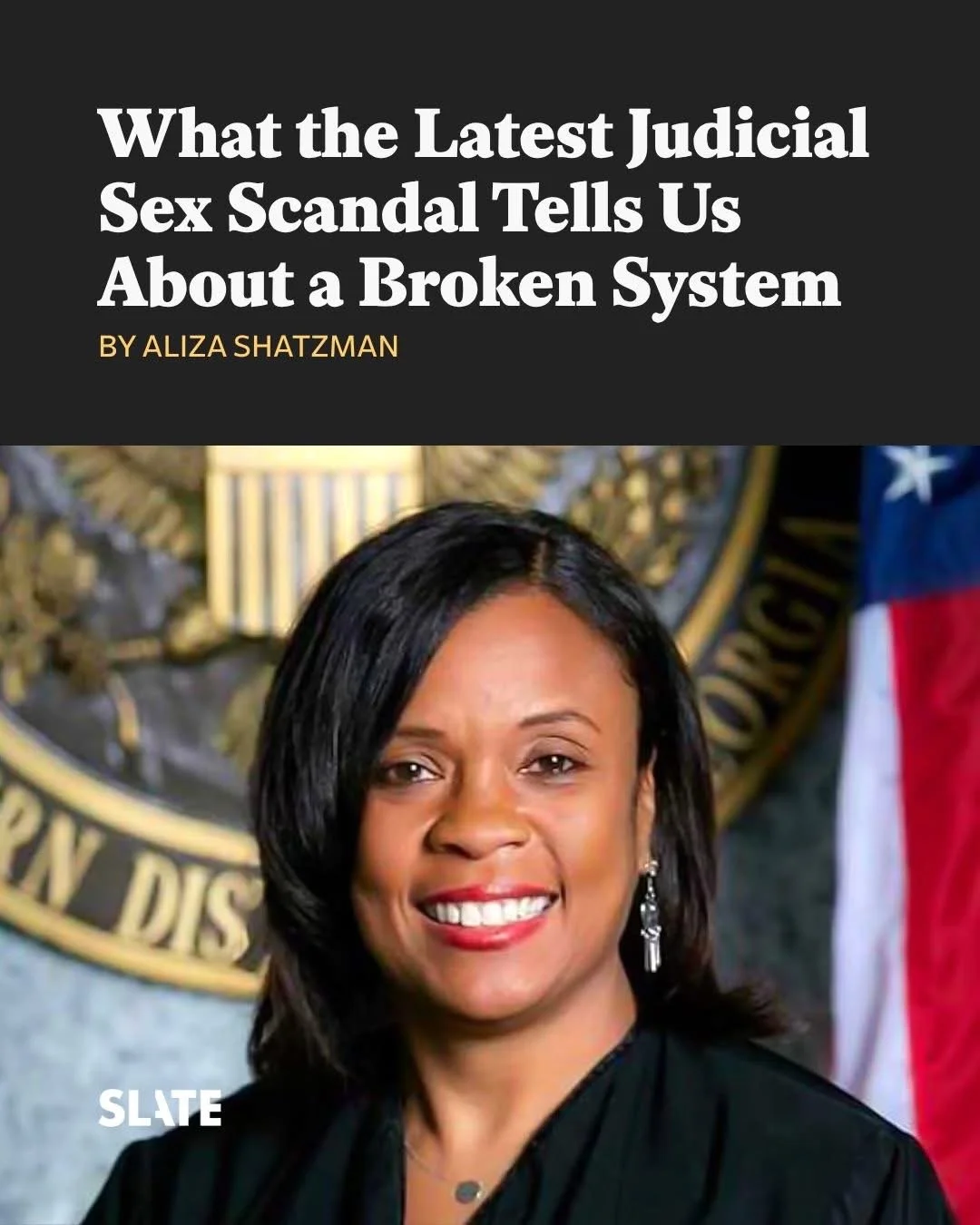
What the Latest Judicial Sex Scandal Tells Us About a Broken System
Judge Eleanor Ross is the latest in a long line of examples of the most hypocritical double standard: judges hold others accountable for misconduct but are never held accountable themselves. Failing to act now sends a disturbing message: accountability is optional for the powerful, LAP’s Aliza Shatzman argues in Slate
Glassdoor for Judges’ Celebrates Its Second Birthday
LAP’s President and Founder, Aliza Shatzman, wrote for Above the Law on the second anniversary of LAP's Clerkships Database launch: an innovative third-party solution to the lack of transparency and accountability in judicial clerkship hiring and the judiciary. Shatzman writes that there’s nothing more important for law students and young lawyers than taking agency over their lives and careers by informing themselves before applying.
The Judiciary Is Still Unaccountable, And This Congress Won’t Fix It
LAP’s President and Founder, Aliza Shatzman, wrote for Above the Law reflecting on the four-year anniversary of her congressional testimony advocating for the passage of the Judicial Accountability Act, and the ongoing fight for judicial accountability. “As someone who identified an unmet need 4 years ago and filled the void myself, there’s no one more motivated to create meaningful change than someone working to fix systems that personally screwed them over,” wrote Shatzman.
Maryland Federal Judge Lydia Kay Griggsby Acknowledges Creating ‘Abusive’ Workplace
LAP’s President and Founder, Aliza Shatzman, wrote for Above the Law about a recent disciplinary order from the United States Court of Appeals for the Fourth Circuit finding that Lydia Kay Griggsby of the U.S. District Court for the District of Maryland created an “abusive” workplace for her law clerks. Clerks reported bullying, public humiliation, and emotional distress, with one co-clerk even too traumatized to eat or drink during the day.
Just 2 Federal Law Clerks Filed Complaints Against Judges Last Year
Aliza Shatzman, LAP’s President and Founder, wrote for Above the Law on the broken system that leaves federal law clerks unable to report judicial misconduct. In 2025, just two clerks filed complaints under the Judicial Conduct and Disability Act, even though the judiciary’s own 2023 survey documented 106 instances of actionable mistreatment. Clerks rarely report not because misconduct is rare, but because the process is stacked against them: judges have life tenure, enjoy legal immunity, and clerks face real risks of retaliation.
Federal judge acknowledges 'abusive workplace' in court order (NPR)
LAP’s President and Founder Aliza Shatzman spoke with NPR about U.S. District Court Judge Lydia Kay Griggsby, who acknowledged creating an “abusive workplace,” according to a recently-released Fourth Circuit disciplinary order.
Newly released court records reveal misconduct inquiry into federal judge (NPR)
LAP’s President and Founder Aliza Shatzman spoke with NPR about former judge Mark Wolf, who allegedly retired in November 2025 to take a principled stand against executive branch overreach—but actually resigned amid a misconduct investigation to evade accountability.
Court Finds Probable Cause for Hostile Workplace by US Judge
LAP’s President and Founder Aliza Shatzman spoke with Bloomberg Law about a judicial misconduct investigation into a former district court judge within the First Circuit who left the bench in November 2025.
Second Circuit Judge Accused Of Bullying Her Law Clerks — Again
The judiciary has a harassment problem that no one cares to solve, LAP’s President and Founder Aliza Shatzman argues in Above the Law. Judge Sarah Merriam is just the latest in a long line of examples of judges who abuse their power by mistreating staff, yet most judicial misconduct never comes to light.
Advocacy group accuses US appeals court judge of mistreating law clerks (Reuters)
LAP’s President and Founder Aliza Shatzman spoke with Reuters about LAP’s first judicial misconduct complaint, filed against Second Circuit Judge Sarah Merriam.
Federal appeals court judge is accused of bullying her clerks (NPR)
LAP’s President and Founder Aliza Shatzman spoke with NPR’s Carrie Johnson about LAP’s first judicial misconduct complaint, filed against Second Circuit Judge Sarah Merriam.
Are Judicial Clerkships A Hazard, Or Is There A Clerkship for Everybody?
Given how many judges mistreat their clerks, choosing not to pay $50 to subscribe to LAP's Clerkships Database to inform yourself before clerking is basically consigning yourself to abuse, LAP’s President and Founder Aliza Shatzman argues in Above the Law.
Law Schools Are Lying To Students About Judicial Clerkships
What do you call it when law schools withhold negative information about judges from students and try to prevent them from accessing candid clerkship information beyond the school’s approved resources? Lying.
The Most Important Election No One’s Talking About
Pennsylvania’s Supreme Court election is the most important 2025 election no one outside Pennsylvania is talking about. Yet its outcome will have far-reaching implications for future elections, and for democracy itself.
Federal judges are above the law in the workplace: How a "Glassdoor for Judges" will help
The Legal Accountability Project created accountability through transparency: there's nothing imperious judges hate more than negative feedback they cannot see, dispute, or silence clerks from sharing through threats of retaliation, Aliza Shatzman writes in GovTrack.